
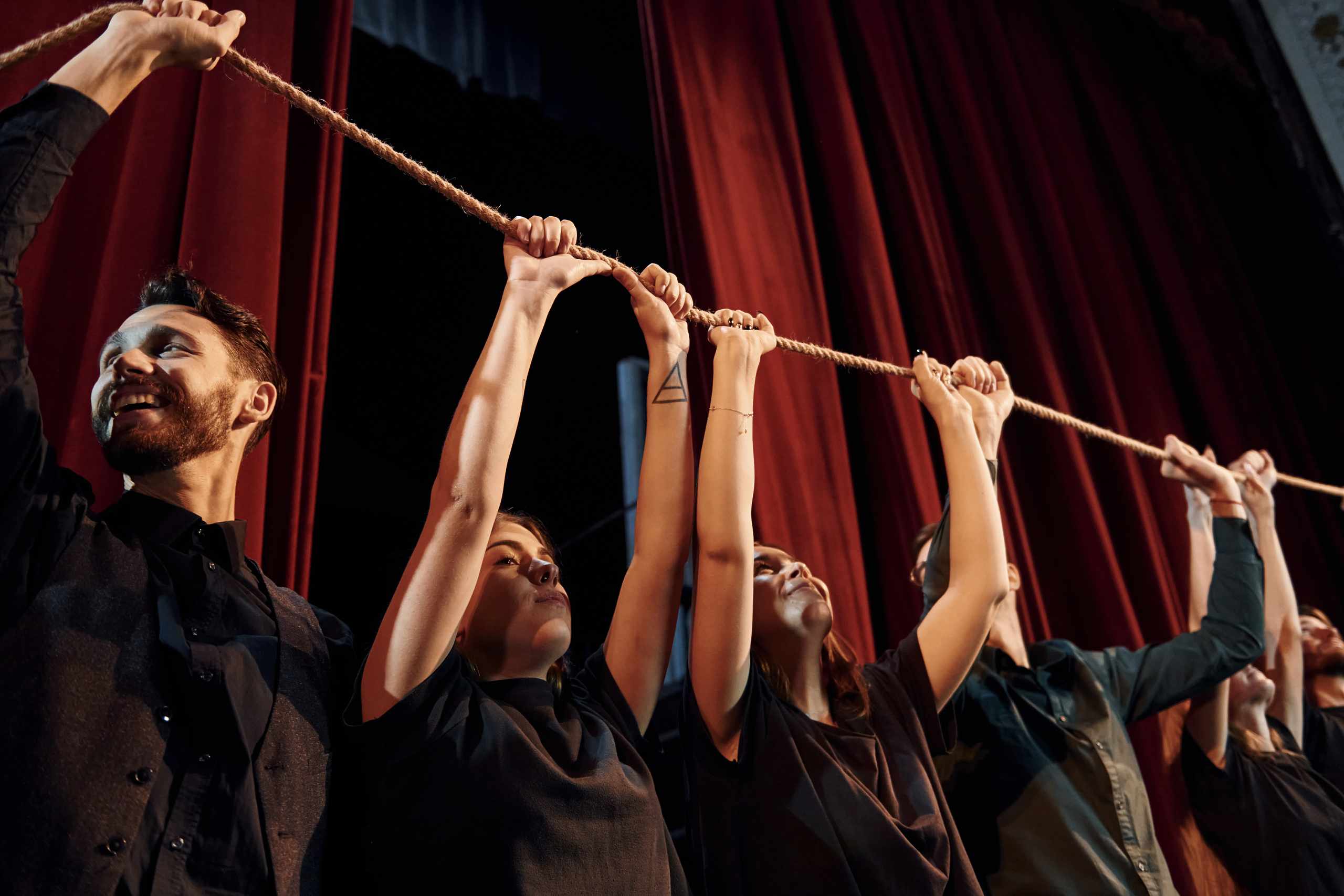
A short scene looks easy because there are so few lines. Then rehearsal starts, and the actor is immediately overwhelmed with voice, body, cues, emotion, movement, and memorization. So before performing, read the scene first in a practical and slow way. The goal is not to make it dramatic right away. The goal is to understand the scene so clearly that your first acting choices have some support.
First, read through the scene without acting at all. Do not add a voice, big gestures, or heavy emotion. Just read the words and notice the context. Who is speaking? Who is listening? What preceded this? What changes by the end of the scene? This reading gives you an outline to work from. Without it, you risk just performing the surface of the words while missing the tension of the exchange.
Next, find the character’s objective. That means: what does the character want from the other person in the scene? You do not need a complex answer. They may want to be heard, accepted, seen, dismissed, included, or respected. Pick one clear objective, and suddenly the lines become more interesting to play because now each line supports that goal. A clear objective also keeps you from being overly emotional. Instead of playing the emotion, try to perform the activity, trying to convince, hide, threaten, reject, or beg.
Then, look for the beats. A beat is a change in a character’s thought, strategy, or energy. A character might begin by playing a joke, then getting defensive, then telling the truth. This change of pace is important so the scene is not flat and one-note. Use a pencil to draw a line through the script where the change occurs. This does not mean that you cannot change the beat later; it just means you have marked your rehearsal choices. You can change them as you hear a different rhythm in your scene partner or lines.
Then read the scene aloud and listen for how your breath or timing is. Many new actors rush because they are nervous, or they are trying to prove that they know their lines. The rush is the thing that often hides all of this meaning. Try to say the scene as if you are speaking to a wall of the room, clearly articulating the word endings. When there is a pause, do not be afraid to fill the silence with something. A pause might be the character making a decision, listening, objecting, or recognizing a new fact.
Movement does not necessarily come from anxiety or fear either. Think about where the character’s body might move first. Does the character need more or less distance, safety, attention, or control? Stepping forward, pivoting away, or remaining still could be physical choices that make sense. If you do not walk around just to avoid the feeling of stillness, you could draw attention away from the scene. If you do not move just because you are afraid, you might look physically frozen. Let your actions come from your character’s actions.
One helpful way to self-monitor is to record yourself on your phone while reading through the scene. Listen to it without playing the role, so you know your character’s lines. Do you hear the objective behind the words? Are the sentences complete? Do you have a variety of speeds when the scene moves in one direction or another? Do your pauses show some sort of decision-making or listening? That type of analysis can keep your practice focused. You are not trying to see how well you act. You are noticing where you could change something in the next rehearsal.
Short scenes are more playable if you read them with the meaning in mind and not the effect. Start with the setting, then pick an objective, mark your beats, breathe, and move your body as needed. A performance does not need to develop all at once. Early on, a clear choice that you can build on and adjust can be more beneficial than a big scene that you cannot recall or understand.